The pause will give the City time to conduct a comprehensive review of the sector.
City building | September 16, 2026
Today, City Council approved an Interim Control By-law(ICBL) that temporarily prohibits the development of major digital infrastructure facilities such as data centres for up to one year.An ICBL is a provincial planning tool that allows a municipality to temporarily pause a specific type of development in a defined area for further study. This gives municipalities time to determine the best long-term planning approach before new development proceeds.
The ICBL approved today applies to applications for new major digital infrastructure facilities, including conversions or expansions of existing facilities, located across the City (as shown in this map). These large-scale facilities have computer systems, servers and related equipment that store or process digital information. Under the ICBL, facilities that have a total peak power demand of 10 megawatts or more will not be permitted for up to one year.
Guiding future development
During the temporary pause, the City is conducting a comprehensive policy review for major digital infrastructure facilities. The review will assess whether policies and regulations, such as the Official Plan and Zoning By-law, need to be updated. It will also consider any new guidance or requirements from the province’s Data Centre Playbook as they become available.
There will be opportunities for public engagement during the review. An interim report outlining the study scope and timeline will be presented to Council later this year. Updates will be posted on the City’s data centre policy review webpage.
Once the review is complete, City staff will bring recommendations to Council to help guide future planning policies and regulations for data centres and other major digital infrastructure projects.
Background
A data centre is a facility that houses networked computers (servers), data storage drives and networking equipment that store and process digital information. There are various types of data centres including artificial intelligence, hyperscale, enterprise, cloud computing and comparable uses.
Data centres are currently classified as “Warehousing, Distribution and Wholesaling” under the Official Plan, and as “Warehouse/Distribution” or “Science and Technology Facilities” under the City’s Zoning By-law.
There are several data centres already permitted and/or operating in the city of Mississauga.
The City’s efforts to make it easier to build new homes, including significant development charge reductions, helped secure the substantial new funding.
City building | September 3, 2026
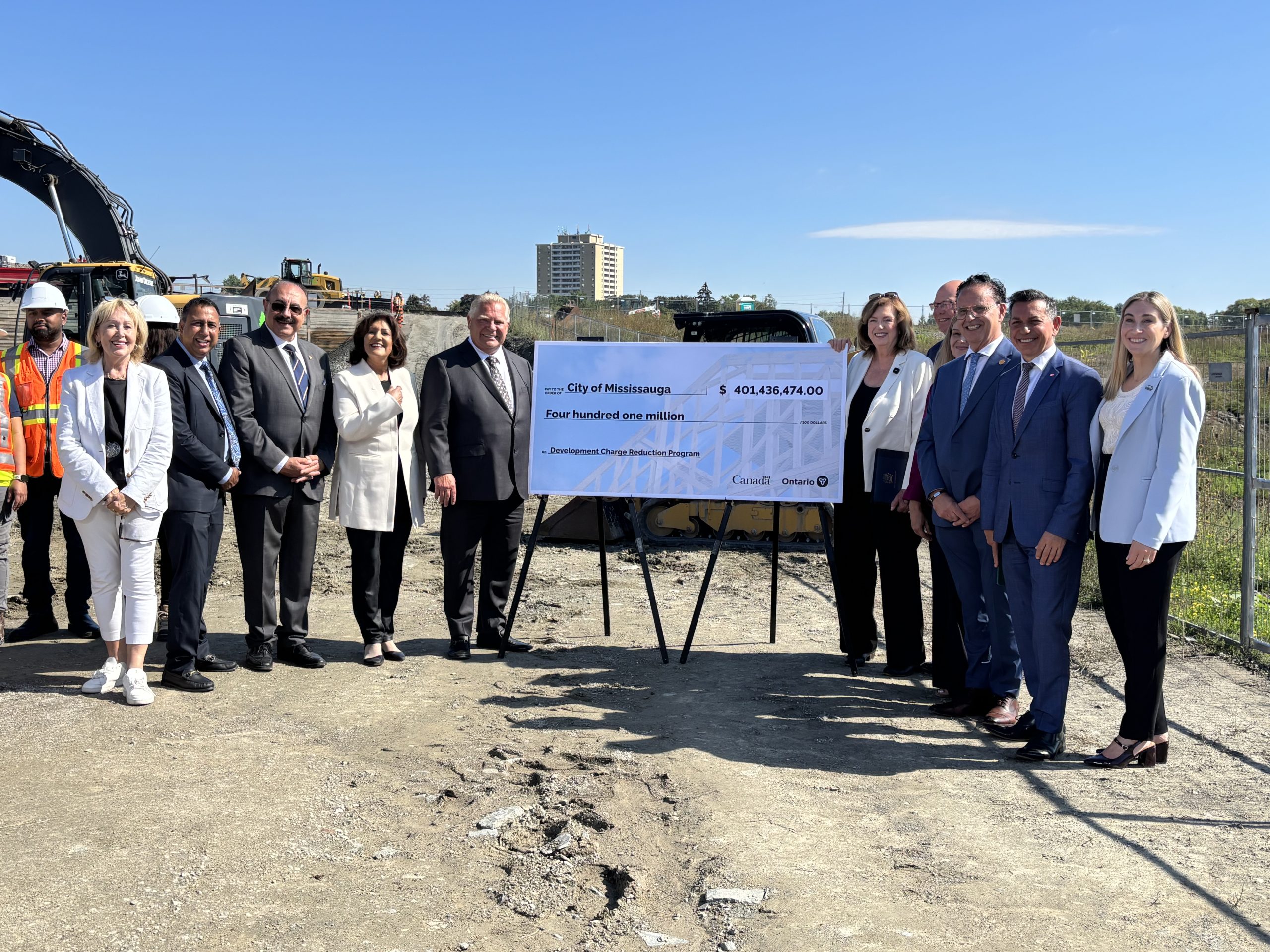
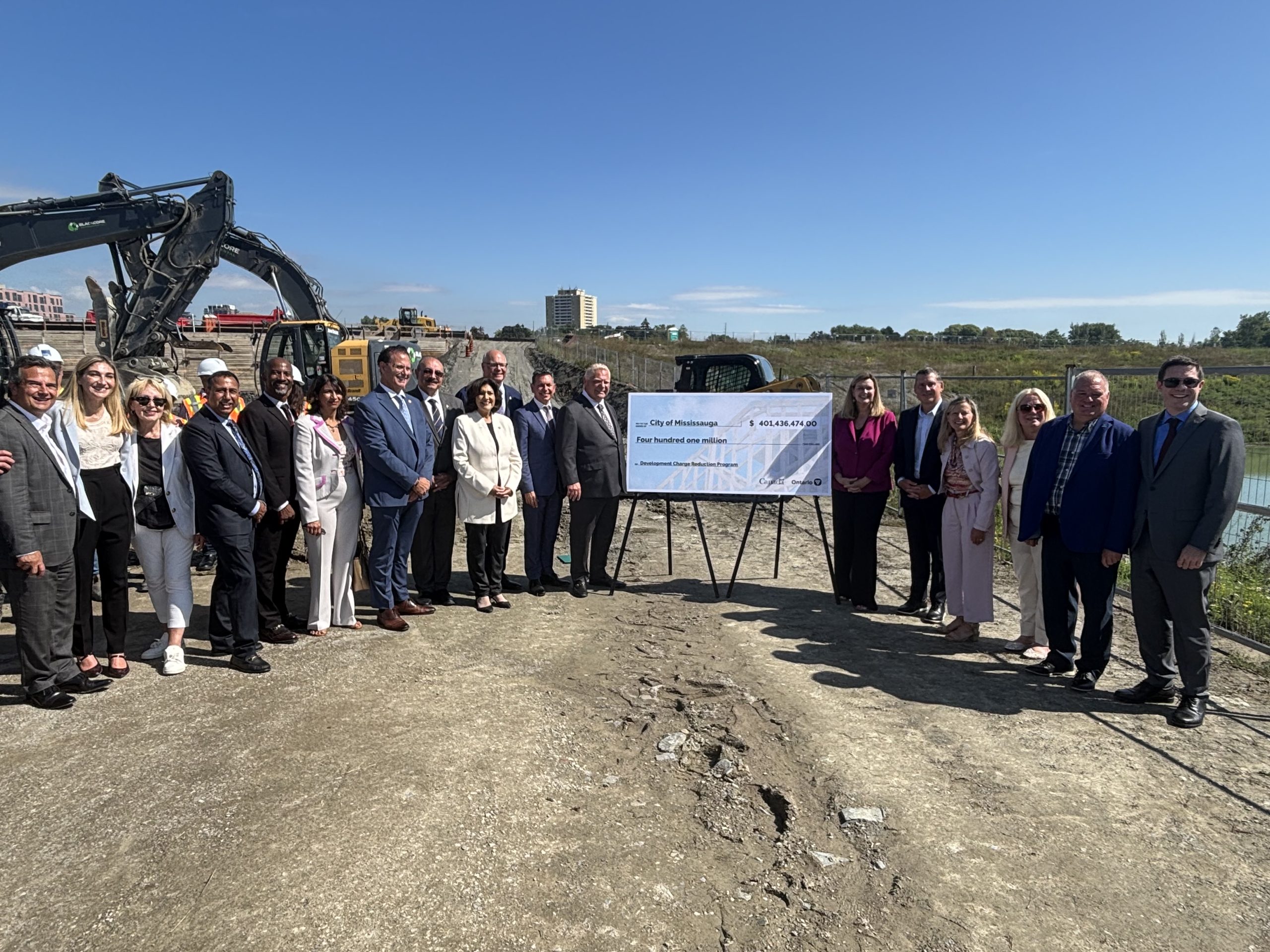
Today, the governments of Ontario and Canada announced up to $401.4 million in funding to help Mississauga build housing-enabling infrastructure including important new transit projects.Mayor Carolyn Parrish and Members of Council joined Ontario Premier Doug Ford for today’s official announcement alongside Rob Flack, Minister of Municipal Affairs and Housing, Jennifer McKelvie, Parliamentary Secretary to the Minister of Housing and Infrastructure and Member of Parliament for Ajax, and Peter Fonseca, Member of Parliament for Mississauga-East Cooksville.The funding, part of the Development Charges Reduction Program, helps municipalities who have reduced development charges invest in the infrastructure they need to support growth. It is part of the broader Canada-Ontario Partnership to Build.
Mississauga was one of the first cities in Ontario to substantially reduce development charges – by up to 100 per cent – to help get more homes built and make them more affordable. The City has agreed to maintain these reductions until March 31, 2029.
New infrastructure funding
The new funding will help support housing-enabling infrastructure including two key transit projects: a new zero-emissions transit maintenance and storage facility and new downtown transit mobility hub. As Canada’s seventh largest city, significant investment in transit infrastructure is critical to support new housing development.
These investments, which the City has long advocated for, will help support Mississauga’s growing population and deliver lasting benefits for residents and businesses.
New transit maintenance and storage facility
The City is planning a new zero-emission transit facility on City-owned land at 7300 West Credit Avenue to support future growth and improve service.
The City is projecting a 50 per cent increase in transit ridership by 2035 requiring 250 additional buses. MiWay currently operates from its Edward J. Dowling Transit Facility and Malton Satellite Facility. Both facilities are operating at full capacity, which limits fleet expansion and service improvements.
The City’s Climate Change Action Plan calls for significant reductions in greenhouse gas emissions, making the transition to a zero-emission transit fleet a key priority. The new zero emissions facility will help MiWay switch its bus fleet to cleaner technology, expand capacity and improve transit service.
New downtown transit mobility hub
Mississauga’s downtown is growing rapidly. It is currently home to 36,000 residents and over 1,100 businesses. It is an important retail and commercial centre and key transportation gateway. Mississauga’s downtown population is expected to more than double by 2051.
The City is planning a new Downtown Transit Mobility Hub that will expand the City Centre Transit Terminal and bring together local and regional transit services, including the Hazel McCallion LRT. The hub will provide a central gateway for seamless connections, improve transit reliability and support future ridership growth. It will also support transit-oriented development.
The hub will better integrate transit within the City’s walking, cycling and road networks. This will make it easier for people to travel between homes, jobs, businesses and downtown destinations.
The hub is currently moving through the Transit and Rail Project Assessment Process (TRPAP). A TRPAP is a provincial approval process that helps ensure transit projects are planned responsibly and with public input. The TRPAP is expected to be completed by the end of 2027. The project will then move into design, positioning it for construction to help drive the transformation of Mississauga’s downtown.
This important transit investment will help shape a more connected and vibrant downtown that supports new housing, economic development and improved access to key destinations.
Next steps
The funding is subject to the City signing a Canada-Ontario Build Communities Strong Fund bilateral agreement and Transfer Payment Agreement with the province. It is also subject to further due diligence and confirmation of approved projects from both levels of government.
Mississauga’s housing reforms
In addition to significantly reducing development charges, Mississauga has introduced a range of housing-focused measures to support new development and improve affordability. Visit Mississauga.ca/housing to learn more.
Quote
“Mississauga acted early to help get more homes built and make them more affordable for our residents. Today’s announcement demonstrates the value of that leadership. This significant investment from our government partners will help us deliver the infrastructure needed to support new homes in every neighbourhood. It will also help better connect residents and visitors to our downtown. Together with our government partners, we are building the homes, transit connections and community assets needed for a growing city.” – Mayor Carolyn Parrish
Images
From left to right: Silvia Gualtieri, MPP – Mississauga East–Cooksville; Deepak Anand, MPP – Mississauga–Malton; Sheref Sabawy, MPP – Mississauga–Erin Mills; Nina Tangri, MPP – Mississauga–Streetsville; Premier Doug Ford; Mississauga Mayor Carolyn Parrish; Rob Flack, Minister of Municipal Affairs and Housing; Jennifer McKelvie, Parliamentary Secretary to the Minister of Housing and Infrastructure and Member of Parliament for Ajax; Rudy Cuzzetto, MPP – Mississauga-Lakeshore; Peter Fonseca, MP – Mississauga East-Cooksville; Christina Giannone – Board Chair, Ontario Home Builders’ Association, Senior Vice-President, Fram + Slokker
Members of Mississauga Council Stephen Dasko, Martin Reid, Dipika Damerla, Matt Mahoney, Chris Fonseca, Natalie Hart, Brad Butt and Joe Horneck join Premier Ford, Minister Flack, Parliamentary Secretary and MP McKelvie, MP Fonseca, MPP Anand, MPP Cuzzetto, MPP Gualtieri, MPP Sabawy, MPP Tangri and Christina Giannone – Board Chair, Ontario Home Builders’ Association, Senior Vice-President, Fram + Slokker
Please be advised that the City’s electronic permitting system (ePlans) will be unavailable from 4:30 p.m. on Thursday, August 20, 2026, until 7:00 a.m. on Monday, August 24, 2026 to accommodate a scheduled system upgrade.
During this period, users will not be able to access ePlans. Upon restoration of service on August 24, users will access the system through a new URL & redirect.
Users have been notified through established communication channels, and staff are working to minimize disruption during the transition.
Join the virtual engagement anytime until the end of July.
City building | June 23, 2026
The City of Mississauga is reviewing and updating its urban design program. This work will help ensure that the program reflects the needs of those who plan, design and build our city, as well as the people who call it home.
The City is working to create vibrant, well-designed communities while making it easier to build more housing and improve affordability. We want to hear your ideas. Watch a short video to learn more about urban design and tell us what matters most to you.
How does urban design affect you?
Think about a building that stood out or how walkable your neighbourhood is – that is urban design in action. It shapes how we live, from our buildings and streets to the parks and public spaces in between. Whether you’re getting around in the city, spending time at a park or enjoying an outdoor event, urban design shapes the everyday experience of life in Mississauga.
Mississauga has a variety of urban design guidelines that help shape the way our city is designed and built. The Urban Design program review is looking at how we can improve the program so that it meets with the needs of residents today and into the future.
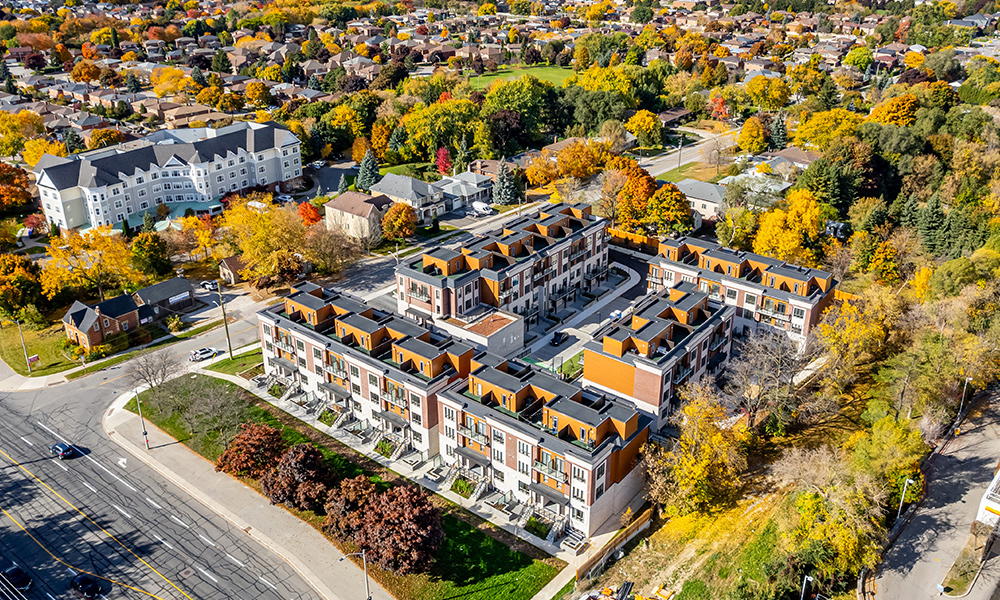
Applewood Towns by Hickory Limited Partnership, architect KIRKOR Architects and Planners and landscape architect MEP DESIGN INC., a housing development located in Applewood, Mississauga. Photo credit: Adil Erturk.
We’re starting the conversation
During the first phase of the Urban Design Program review, we want to understand what matters most to you. That’s why we’ve launched a virtual, on-demand engagement to gather your feedback. Tell us what’s working and where we can improve.
As you take part, think about:
What are your favourite places in the city? What makes them stand out?
What do you think makes good design, or not?
How does urban design affect you in your everyday life?
Your input will help ensure new development fits well into our communities.
It’s easy to tell us what you think
What:
Visit the project website.
Watch the short video.
Complete a quick survey.
Ask our team a question or share a comment.
When:
On demand, 24/7, from Monday, June 22 to Friday, July 31, 2026.
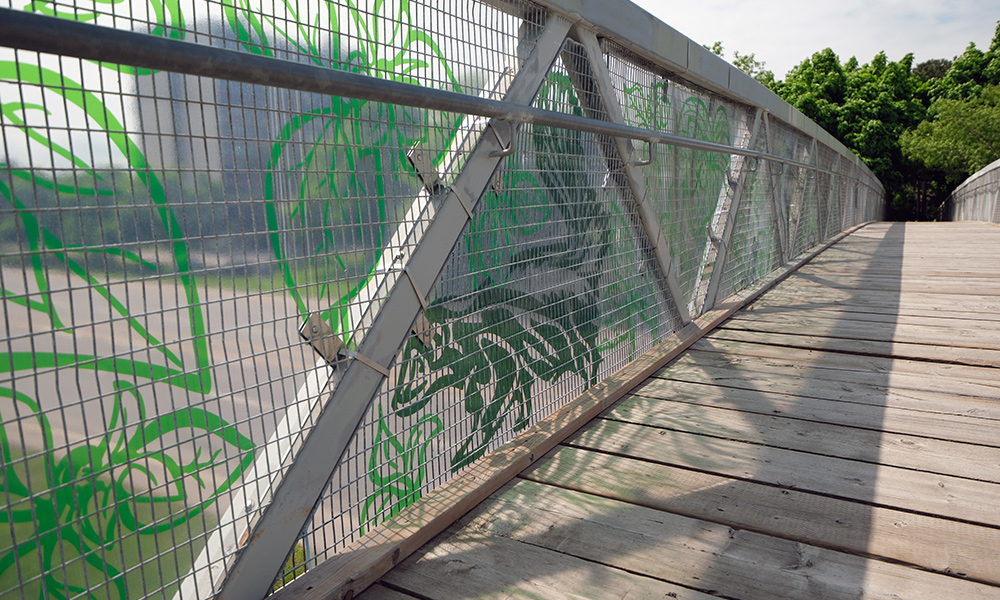
The Living Root Bridge by Bau & Ćos Studio. This public artwork is located on a City pedestrian bridge in Meadowvale, Mississauga. Photo credit: Andres Ulises Bautista.
Background
The Urban Design Program review is part of the City’s ongoing efforts to make Mississauga a great place to live, work, play and visit. The review supports recommendations from the Mayor’s Housing Taskforce and will align with the City’s new Mississauga Official Plan 2051.
The City celebrates excellent urban design through the Mississauga Urban Design Awards. Explore the 2025 winning projects.
Updated by-law helps get more housing built while supporting tenants and keeping rents affordable.
City building | June 25, 2026
Mississauga is taking another step to improve affordable rental housing and support the tenants who rely on it. City Council has approved amendments to the Rental Housing Protection By-law. The by-law helps preserve the City’s stock of affordable rental housing when redevelopment occurs.
The by-law, first enacted in 2019, was updated to better support tenants during the redevelopment process. It applies to approximately 360 rental buildings in Mississauga with six or more units.
Redevelopment expected to rise
More than 85 per cent of Mississauga’s rental buildings (with six or more units) were built before 1990. While these apartments typically offer more affordable rents, the age of the buildings can make them more likely to undergo redevelopment. Regulating this activity allows the City to balance tenant protection with the need to increase overall housing supply.
The approved amendments introduce stronger supports for eligible tenants living in affordable units affected by rental housing redevelopment. The protections include:
Compensation to cover the difference between tenants’ current rent and market rent during construction, if needed.
Moving cost assistance ranging from $1,000 to $1,500 per move.
Help finding temporary housing, with developers required to provide support services.
Tenants will also continue to have the right to return to replacement units at similar rents, with increases limited to provincial rent guidelines.
Keeping replacement units affordable
To better reflect today’s housing market, the by-law updates also address affordability requirements. The updated by-law:
Continues to require that replacement units remain affordable at similar rents for at least 10 years – and that they remain rental units for at least 20 years.
Lowers the threshold for protected units from 175 per cent average market rent ($3,500 for a 2-bedroom unit in 2025) to 125 per cent of vacant unit average market rent ($3,100 for a 2 bedroom unit in 2025). This means the rules apply to more moderately priced units.
Introduces income-based tenant matching – this means that if the original eligible tenants don’t move back to a replacement unit, the vacant retained units will be offered to people whose incomes meet the affordability threshold for the similar affordable rents. This approach ties affordability protections directly to the physical unit and ensures that tenants who need affordable rents have access to affordable units.
In addition, under the updated by-law, replacement units must also be comparable in size to the original unit.
Other ways the City is supporting tenants
The by-law updates approved today are part of the City’s broader efforts to support tenants and make it more affordable to rent in Mississauga.
The by-law, which takes effect September 1, 2026, increases protections for tenants who face eviction when their landlord requires them to move out for extensive renovations or repairs. It requires landlords to obtain a license, clearly inform tenants of their rights and provide financial supports for tenants.
Building more affordable rental housing
In April, Council also approved an increase in funding for the Affordable Rental Housing Community Improvement Plan (CIP) from $44 million to $70 million. The CIP offers grants for developers who want to build rental buildings with affordable units.
The CIP is designed to quickly increase the supply of rental housing, including affordable and below-market units. The program provides financial incentives for private and non-profit developers, including grants and the waiving of certain fees. This helps offset the costs of shovel-ready rental projects with affordable units.
Council also approved an additional $1 million to the CIP to help continue funding gentle density rebates for people building second, third and fourth units in neighbourhoods.
The City is applying for $2.2 billion in funding for projects that will help transform Mississauga and unlock thousands of new housing units.
City building | June 17, 2026
Mississauga has announced the five transformational projects it will put forward for the new Development Charges Reduction Program (DCRP). Mississauga was one of the first cities in Ontario to reduce development charges to help get more homes built and make them more affordable. The City’s decision to lower development charges – by up to 100 per cent – puts Mississauga in a strong position to receive funding under the program.
The DCRP is a key part of the Canada-Ontario Partnership to Build. This is an $8.8 billion joint initiative aimed at increasing housing supply. The program provides funding to municipalities that lower development charges by at least 30 to 50 per cent and move forward with projects that help get new homes built faster.
Projects that unlock new housing
Mississauga is submitting the following five projects for DCRP funding.
Transit maintenance and storage facility ($650 million)
A new zero-emission facility will help MiWay switch its bus fleet to cleaner technology, expand capacity and improve transit service. It will also support transit-oriented development by enabling approximately 9,900 new housing units by 2036.
Downtown transit mobility hub ($500 million)
This project will expand capacity at the City Centre Transit Terminal and prepare the network for future LRT ridership growth. It will improve connections and access to higher-order transit and make it easier to build higher-density housing in the downtown core. It is expected to help enable approximately 9,900 new housing units by 2036.
Library and community centre projects ($175 million each)
Two net-zero community centres and libraries – in Mississauga Valley and Cooksville – will help expand access to recreation and library services in some of the city’s fastest-growing neighbourhoods. These projects will help ensure community infrastructure keeps pace with significant growth and development.
A series of road and servicing upgrades across key corridors citywide will help improve capacity and support growth. These investments also help unlock development lands. They will reduce congestion and connect new communities to transit and services. The project is expected to support approximately 9,000 new housing units over the next decade.
Downtown music and convention centre ($500 million)
This project will help spur growth by attracting investment and supporting a vibrant, transit-oriented downtown. As a destination for residents and visitors, the project will make it easier to support higher-density housing and continued development. It could help enable up to 14,000 new housing units over the next decade.
The projects include a mix of housing-enabling infrastructure and city-building projects that support complete communities that prioritize homes, jobs, services and transit.
Mississauga’s housing reforms
In addition to significantly reducing development charges, Mississauga has introduced a range of housing-focused measures to support new development and improve affordability. Guided by the Mayor’s Housing Task Force report, highlights include:
Incentives for affordable rental housing: Increased funding for the City’s $70 million affordable rental housing program to help get more affordable rental housing built.
Encouraging more housing citywide: The newly approved Mississauga Official Plan allows permissions for more than 370,000 new residential units city-wide by 2051.
Tools to help homeowners add new units: Mississauga’s pre-approved garden suite plans make it easier and less expensive to build a backyard suite. Grants are also available under the City’s Gentle Density Incentive program to encourage second, third and fourth rental units in neighbourhoods.
Streamlining development processes: Mississauga is making it easier to do business with the City and simplifying approvals to help deliver housing more quickly. This includes pre-zoning lands next to major transit station areas.
Tax-relief to encourage rental development: 35 per cent reduction applied to the municipal tax rate for new multi-residential subclass.
Next steps
The City will submit its DCRP application by the June 19, 2026 deadline. If approved, the funding could cover up to 90 per cent of eligible project costs. This would allow the City to advance key projects that support housing growth. These projects would help deliver lasting benefits for Mississauga’s residents and businesses.