BRAMPTON, ON (April 23, 2026) – Last night at the 2026 AdvantAge Ontario Convention in Toronto, Peel Region’s Seniors Services was recognized for its Culture and Well-Being Program – a forward-thinking initiative that strengthens workplace culture, employee well-being, and service excellence across the region’s Long Term Care and Adult Day Services Centres.
The Innovation and Excellence Workplace Quality Award was presented to Culture and Well-being Advisors, Leah Crosby and Hermeen Toor-Birring, and General Manager of Seniors Services, Cathy Granger, at the province’s premier education and networking event where provincial leaders in seniors’ care gather to celebrate innovation and leadership across the sector.
Guided by the Seniors Services Strategic Plan, the program reflects a comprehensive approach to workforce well-being that is embedded directly into daily operations, leadership practices, and service-specific policies and processes that sustain the well-being of front-line staff.
In close collaboration with team members and leaders across Seniors Services, as well as partners from Health Services and Human Resources, the program focuses on building psychologically safe, inclusive, and resilient workplaces through intentional education, practical tools, and on-the-ground support.
Since its introduction, the program has helped foster a more engaged and supported workforce by responding to the lived realities of both frontline staff and leaders in Seniors Services, many of whom demonstrated extraordinary resilience while caring for seniors through COVID‑19. By investing in staff and leadership well-being, the program supports the long-term sustainability of the compassionate, person-centred care that residents and clients depend on.
Peel Region’s program was selected for its innovative “embedded” model, positive outcomes, and potential to inspire change across Seniors Services. Peel Region continues to share learnings and tools with partners in seniors care, reinforcing its role as a provincial leader in workforce well-being and person-centred care.
Starting April 27, Mississauga youth can take part in fun, free activities during Youth Weeks and register for the Sauga Summer Pass.
City services | April 22, 2026
From trying new activities to hanging out with friends, Mississauga youth love to stay active and connected. The City is helping make those plans easier with fun, free activities during Mississauga Youth Weeks and the launch of this year’s Sauga Summer Pass.
Back again this year, these popular programs are designed to help youth stay active and on the move. They encourage physical activity, healthy lifestyles and creativity during one of the busiest times of the year.
Mississauga Youth Weeks
Mississauga Youth Weeks will run from April 27 to May 8, 2026. This action-packed program gives youth aged 12 to 24 the chance to take part in free activities at community centres and libraries across the city.
All events are free. This year’s notable activities for youth aged 12 to 24 include:
Clay and crafts workshops
Water safety and aquatic activities
Career workshops at Mississauga Valley on May 4 and Malton Youth Hub on May 7
Sledge hockey at Iceland Arena on May 1
Sports tournaments, skills building and more
Build your schedule of drop-in programs and registered activities online and get ready to enjoy the sessions!
Register for a Sauga Summer Pass
Make the summer months easier on your wallet with a pass that provides Mississauga youth ages 12 to 16 with access to free MiWay bus rides and public fun swims at all City indoor and outdoor pools. The pass also offers free fitness centre access for youth ages 14 to 16 at all participating locations with parental consent.
The Sauga Summer Pass is a valuable annual offering for staying engaged in the summer months. Pass holders can save on drop-in swimming and fitness centre fees and transit fares. For example, with the Sauga Summer Pass, youth save $4.50 on a single cash fare and $2.90 on a PRESTO fare. It’s an easy and affordable way for youth to explore Mississauga this summer.
Registration opens on Monday, April 27 on a first-come-first-served basis. To register, bring a completed application form and a physical piece of identification to verify your birth date to one of the community centres listed on the registration form.
BRAMPTON, Ont. – April 20, 2026. Today marks the start of National Work Zone Awareness Week, a yearly reminder to pause and consider the importance of travelling carefully through work zones.
As construction season gets underway across Peel, drivers, cyclists, and pedestrians are reminded to slow down and use caution when travelling through work zones. Safe actions protect workers and other road users and ensure everyone makes it home safely.
How do I travel safely in a work zone?
A work zone is an area where any type of construction is taking place on a road.
Start by being prepared. Work zones and construction delays can be avoided by planning ahead. Use our interactive construction projects in Peel map to view work happening on your route and use Waze for real-time construction alerts and instant reroutes.
Be aware: Pay attention to signage and road conditions.
Be flexible: Stay alert and expect the unexpected.
Keep your distance: Give workers, construction boundaries, and everyone on our roads extra space.
Slow down: Be aware of posted speed limits and be ready to stop.
Stay focused: Eyes up, phone down – avoid distractions.
Peel Region is committed to the Vision Zero approach and is working to prevent injuries and fatalities resulting from collisions. Vision Zero focuses on everyone’s responsibility to be aware of their surroundings and follow the rules of the road.
Service Delays: Sunday April 26, 2026 | 8 am to 1 pm
23 Lakeshore (East)
Left turns will not be permitted from southbound Southdown Rd to eastbound Lakeshore Rd for the Mississauga Marathon until opened by Peel Regional Police.
Route 23 east will be detoured from Southdown Rd to Truscott Dr to Clarkson Rd back to Lakeshore Rd and normal routing.
44 Mississauga Road
Mississauga Rd will close between Burnhamthorpe Rd and Dundas St and Burnhamthorpe Rd will close between Erin Mills Pky and Hurontario St for the Mississauga Marathon until opened by Peel Regional Police.
Route 44 will be detoured from Mississauga Rd to Eglinton Ave, Erin Mills Pky, The Collegeway, South Millway, and South Common Bus Terminal. Exit terminal to Burnhamthorpe Rd, Erin Mills Pky, Eglinton Ave to Mississauga Rd.
Route 44 will not service UTM during the Mississauga Marathon.
Peel Regional Police has launched a new portal to accept general driving concerns from the public. This portal is now live on our Online Reporting Platform. This portal will allow members of the public to report driving behaviours that pose a risk to public safety and where police enforcement may be required.
This program expands on our existing Road Watch program that allows members of the public to report specific dangerous or aggressive driving that pose a risk to public safety but are not emergencies. Key Highlights between each program include:
Observations of driving behaviour that pose a risk to public safety but are not emergencies.
No license plate required
City studies will need to be reviewed to validate and assess the reported concerns.
Examples: Roadways where police enforcement may be required for infractions such as speeding, failure to comply with stop signs, illegal U-turns, and other related traffic violations.
The extra funding will help get 3,600 new rental units under construction including 545 with more affordable rents.
City building | April 14, 2026
The City is taking another step to help get more homes built in Mississauga that people can afford to rent.
Council has approved an increase in funding for the Affordable Rental Housing Community Improvement Plan (CIP) from $44 million to $70 million. The CIP offers grants for developers who want to build rental buildings with affordable units. The grants must be spent by July 31, 2027.
The additional funding for the program will come from the City’s third instalment of the federal Housing Accelerator Fund.
Strong interest in the program
The CIP is designed to quickly increase the supply of rental housing, including affordable and below-market units. The program provides financial incentives for private and non-profit developers, including grants and the waiving of certain fees, to help offset the costs of shovel-ready rental projects with affordable units.
Developers and homeowners have shown strong interest in the CIP since it was adopted in July 2024. The new funding is expected to help get more than 3,600 new purpose-built rental units under construction, including 545 with more affordable rents.
Council also approved an additional $1 million to the CIP to help continue to fund gentle density rebates. To date, the CIP has funded over $562,000 in rebates for homeowners who added second, third and fourth units in neighbourhoods. It has supported over 580 additional residential units and three fourplex applications.
The success of the CIP underscores the City’s ongoing leadership to improve housing supply and make affordable rentals more accessible for residents with moderate incomes.
Building more homes, faster
The CIP is one part of the City’s broader efforts to bring down the cost of renting or owning a home and make it easier to build more housing.
In January 2025, Council adopted the Mayor’s motion to further reduce development charges (DC) in Mississauga. Under the City’s incentives program, DCs for purpose-built rental apartments have been reduced by 100 per cent for 1-bedroom + den, 2-bedroom and 3-bedroom units. All other residential units benefit from a 50 per cent DC reduction.
Mississauga Official Plan 2051 sets a strong vision for the future of the city and brings new policies that will allow for the construction of more than 370,000 new residential units city-wide by 2051.
The CIP aligns with the City’s goals to support affordability, accessibility and aging in place. Building more purpose-built rental units fulfils key actions under the City’s Action Plan for New Housing and recommendations from the Mayor’s Housing Task Force.
The Region of Peel has completed emergency repair work that required the closure of a lane on Lakeshore Rd. E. The work was started on Friday afternoon because of a water leak in the area of 81 Lakeshore Rd East.
Site restoration is currently underway, and the affected lane on Lakeshore is expected to reopen this afternoon (April 13).
Thank you to residents and motorists for your patience and understanding.
Location
Repair Location: 81 lakeshore rd e ,Mississauga Click to view Map
Work Details
Start Date: April 11, 2026
Start Time: 1:00 AM
Estimated Duration: 8 hours
Repair Crew: Pacific Paving
Spills Notified: No
Water Service Interruption
Service Interruption: Yes
Expected Number of Properties Impacted: 1
Types of Properties Impacted: ICI
Comments: repair water service leak in road
Traffic Impact
Traffic Impacted: Yes
Lane Closures: Yes
Emergency Vehicle Access Available: Yes
Public Transit Routes Impacted: No
Traffic Detours: No
Comments: one slow lane will be closed in order to carry out the repair work
Mississauga is gearing up to celebrate the FIFA World Cup 2026™ in a way that reflects the City’s passion, diversity and love of sport.
Entertainment and activities | April 8, 2026
With two months to go until the world’s largest sporting event arrives in North America, the excitement is real in the City of Mississauga.
The tournament will be hosted by Canada, the United States and Mexico, and runs from June 11 to July 19, 2026. Forty‑eight teams, including Canada, will compete in 104 matches across North America, including games in Toronto. The City expects strong community interest and excitement across Mississauga.
Hosting Canada Celebrates FIFA World Cup 2026™
City of Mississauga is excited to host a stop on the Canada Celebrates FIFA World Cup 2026TM tour in partnership with Visit Mississauga, as announced earlier today. Taking place on July 1 in downtown Mississauga, there will be lots happening in the heart of the city this Canada Day. This one‑day event will attract visitors and fans from across the country to watch the tournament, participate in soccer-themed festivities and enjoy the jubilation of the game.
This tour stop will showcase Mississauga on a national stage and add to the City’s FIFA World Cup 2026™ plans.
Stay tuned for more exciting updates to come, including the match schedule and city-wide celebrations. For additional details, please visit the saugaLIVE website in the coming weeks as plans are finalized.
Sneha Subramanian Kanta will serve as a literary ambassador to help elevate the status of poetry and literary arts in the community.
City services | April 8, 2026
The City of Mississauga is pleased to announce that Sneha Subramanian Kanta will be its sixth Poet Laureate, where she will hold this position from 2026 to 2028. Designated as the City’s literary ambassador, Sneha’s role focuses on enhancing poetry, literary arts and elevating writers within the community through various events and initiatives.
This National Poetry Month, the City renews its commitment to celebrating cultural diversity and fostering its creative sectors. One way this is achieved is by bringing on a new Poet and Youth Poet Laureate every two years to help advance the literary arts. The poets provide public access to literacy programming through workshops and performances across the community, while bringing a fresh perspective through their creativity and input on diverse programs.
Sneha is an award-winning writer and academic whose work spans poetry, research and interdisciplinary collaboration. She has authored six chapbook collections and has been recognized with multiple honours, including Mississauga’s 2025 Civic Award of Recognition and the 2025 Cultural Award from Heritage Mississauga. She was the 2025 Woodhaven Artist in Residence at UBC Okanagan where her collection, Hiraeth, was an honouree for the RBC Bronwen Wallace Award. Her writing has appeared internationally, notably in The Penguin Book of Indian Poets. She currently leads the biodiversity niche as a writer in the international climate-focused project, Manufactured Ecosystems, and is a founding editor of Parentheses Journal.
Initiatives like Poetry Month help advance the City’s Future Directions Culture and Library Plans, helping to promote literacy and lifelong learning, while elevating the status of arts and culture across Mississauga.
Every two years, the City embarks on a search for its new Poet Laureate. This honourary position recognizes a poet who writes excellent poetry or spoken word and has written on themes that are relevant to the residents of Mississauga. A selection committee comprised of arts professionals from the community review applications to help appoint a new candidate. Committee members are selected based on their connection to Mississauga’s literary community and include the current Laureates, a Mississauga Library staff member and at least two members of the community.
Poet Laureate submissions are reviewed using following criteria:
The Poet has made a significant contribution to poetry and the literary arts in Mississauga;
Artistic merit of the submission, including the relevancy to the City of Mississauga and its values;
The potential impact of the proposed civic engagement and/or poetry projects as identified in the applicant’s Letter of Intent.
Sneha will take over the role starting on April 8 from the City’s fifth Poet Laureate, Andrea Josic.
The public can expect to catch Sneha in the community at the City’s annual Poetry Slam on April 23. She will also make an appearance at the City’s annual Canada Day celebration at Mississauga Celebration Square on July 1.
To kick-off her new role, Sneha read from one of her poems titled, The Waves Break at Port Credit, at today’s General Committee meeting. See verse below.
The Waves Break at Port Credit
Sunlight peers in a beam after rain. The intention of rain isn’t thunder. Repetition is how we make music. It is the language of wind-driven waves.
Let me sing to you today about billowing clouds near the water, these clouds appear like dogwoods over the husk of Lake Ontario.
A memory of winter in this city is wild carrots growing on the sides before a crossway leads to a park and junipers which remain persistent over the memory of green.
When light returns,
instead of tall maples, birches, willows, poplars, and sycamores sunbeams pass through interstices of junipers.
The oaks and beech in this lane hold onto their leaves throughout winter until new leaves grow in the vernal equinox.
I know the season through lengthening shadows of barren boughs.
Snow has left nothing in the landscape as it was.
I, too, bring you here to witness the anvil of a new season.
The crayon of light drifts further onto the surface of water,
geese fly and perch on a stony shoreline, two swans swiftly glide over the waves.
Let us wield this kinetic grace into our city. May we all celebrate another season, with moonlight bandaging partially uprooted trees in another regeneration.
Quote
“We’re pleased to welcome Sneha as our new Poet Laureate. A remarkable talent in writing and poetry, she emerged from an impressive group of candidates. The Poet Laureates are our community’s poetry champions and help elevate City initiatives in many ways. They offer new perspectives on literacy, advance Mississauga’s arts and culture scene, and connect with our residents at events. We look forward to seeing Sneha’s inspirational work in action over the next two years as she helps the literary arts reach new heights.” – Lisa Boyce-Gonsalves, Director, Recreation and Culture
Sneha Subramanian Kanta, Mississauga’s Poet Laureate: 2026 to 2028
Mississauga City Council approves new waste collection service levels that will take effect next fall.
City services | April 1, 2026
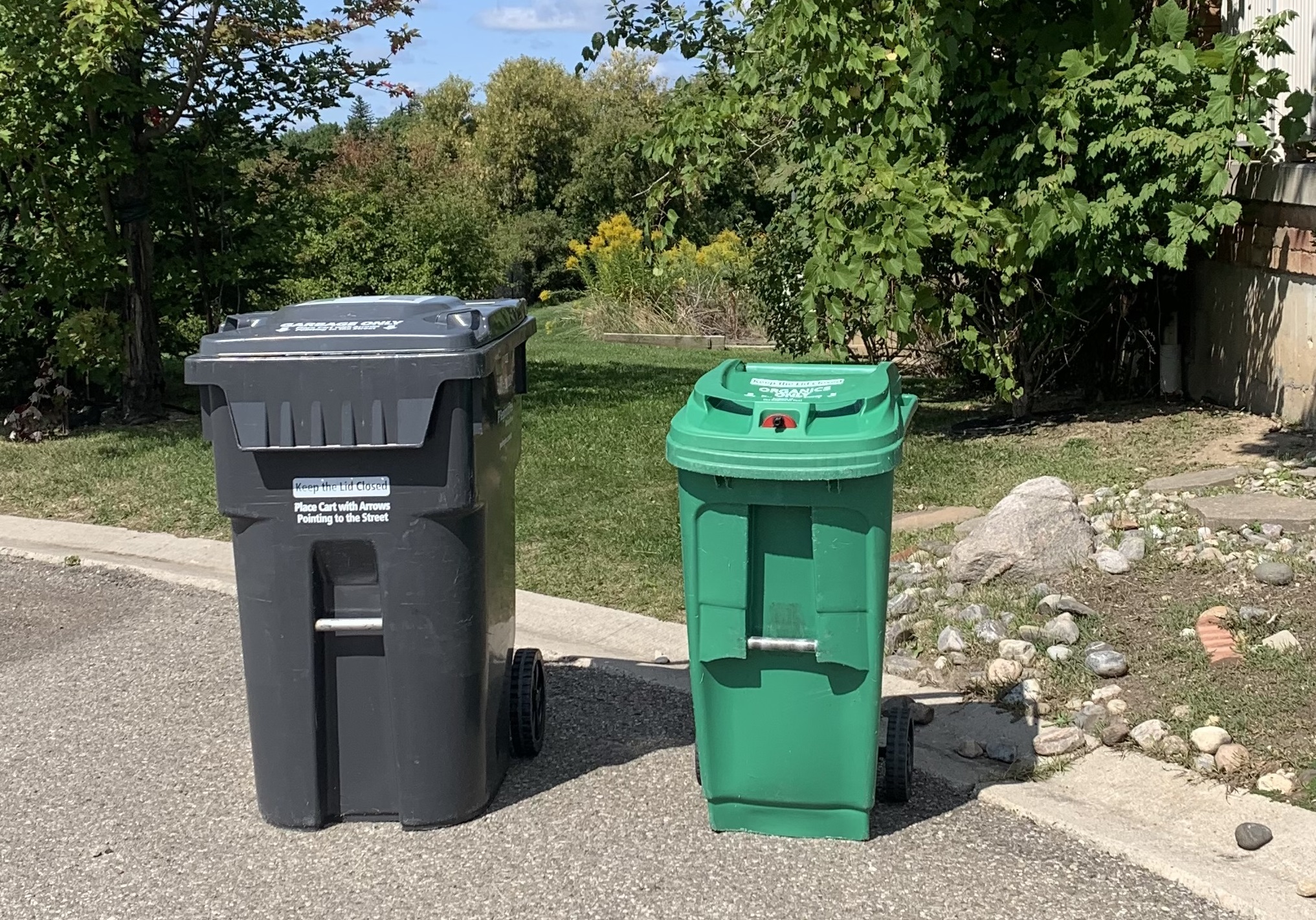
Starting October 1, 2027, the City of Mississauga will take over local waste collection from the Region of Peel, which may change some residents’ collection day and how often yard waste is picked up. The Council-approved service levels are designed to keep collection reliable and meet Mississauga’s needs.
Waste collection includes picking up residential garbage, organics and yard waste and providing services for multi-residential buildings. The community recycling centres will still be run by the Region of Peel. Recycling collection will continue to be handled by Circular Materials, which began on January 1, 2026.
Current waste collection service in Mississauga
The Region of Peel currently provides waste collection service in Mississauga. These service levels include:
A four-day-a-week residential waste collection schedule (Monday to Thursday).
Waste collection from multi-residential buildings.
Weekly yard waste collection in the spring (mid-March to June) and in the fall (October to mid-December).
Bi-weekly yard waste collection in the summer (July to September).
Recycling collection for select locations that are ineligible for collection from Circular Materials.
Future waste collection service in Mississauga
Starting October 1, 2027, the City will provide the following service levels through its new waste collection contracts:
A five-day-a-week residential waste collection schedule (Monday to Friday).
Waste collection from multi-residential buildings.
Bi-weekly yard waste collection for the entire season (mid-March to mid-December).
Recycling collection for select Mississauga locations that don’t receive collection from Circular Materials.
Residential waste collection
Switching to a five‑day residential waste collection schedule will create efficiencies by reducing the number of trucks and labour needed to complete the routes. Shorter, more balanced routes will also help prevent late pickups for residents.
Residential yard waste collection
Switching to bi‑weekly yard waste collection for the entire season will create efficiencies by reducing the number of trucks needed, which also reduces the impact on the environment. It also makes the schedule easier to follow, since it will no longer switch between weekly and bi-weekly service throughout the year.
Recycling collection for ineligible Mississauga locations
Approximately 1,000 locations in Mississauga are ineligible for recycling collection from Circular Materials, including City buildings, emergency services buildings, community centres and arenas, places of worship and some small businesses. Starting October 1, 2027, the City will collect recycling at these locations. These locations won’t need to arrange and pay for private recycling collection.
With the City’s new waste collection contracts, some Mississauga residents may get a new collection day for their garbage and organics. The City will inform residents of their collection day in advance of October 1, 2027.
Quotes
“Mississauga is committed to delivering efficient, reliable waste collection services. These new contracts uphold that commitment. They also mark an important milestone as the City prepares to assume responsibility for waste collection services from the Region of Peel in a smooth transition. These new contracts will ensure waste collection in our growing city remains an affordable, consistent service that puts residents first.” – Mississauga Mayor Carolyn Parrish
“By bringing waste collection services under the City’s oversight, we are creating a more streamlined and sustainable model for Mississauga. The service levels approved by City Council ensure we can deliver efficient and high-quality collection and support better environmental outcomes. Our teams will continue working closely with the Region of Peel and Circular Materials to ensure a smooth transition for October 1, 2027.” – Geoff Wright, City Manager and Chief Administrative Officer