Category

Food for thought

When geese season returns expect more honks and hisses

By Food for thought, Parks

Learn about ways to share outdoor areas with Canada geese and prevent any aggressive encounters.
City services | June 3, 2026


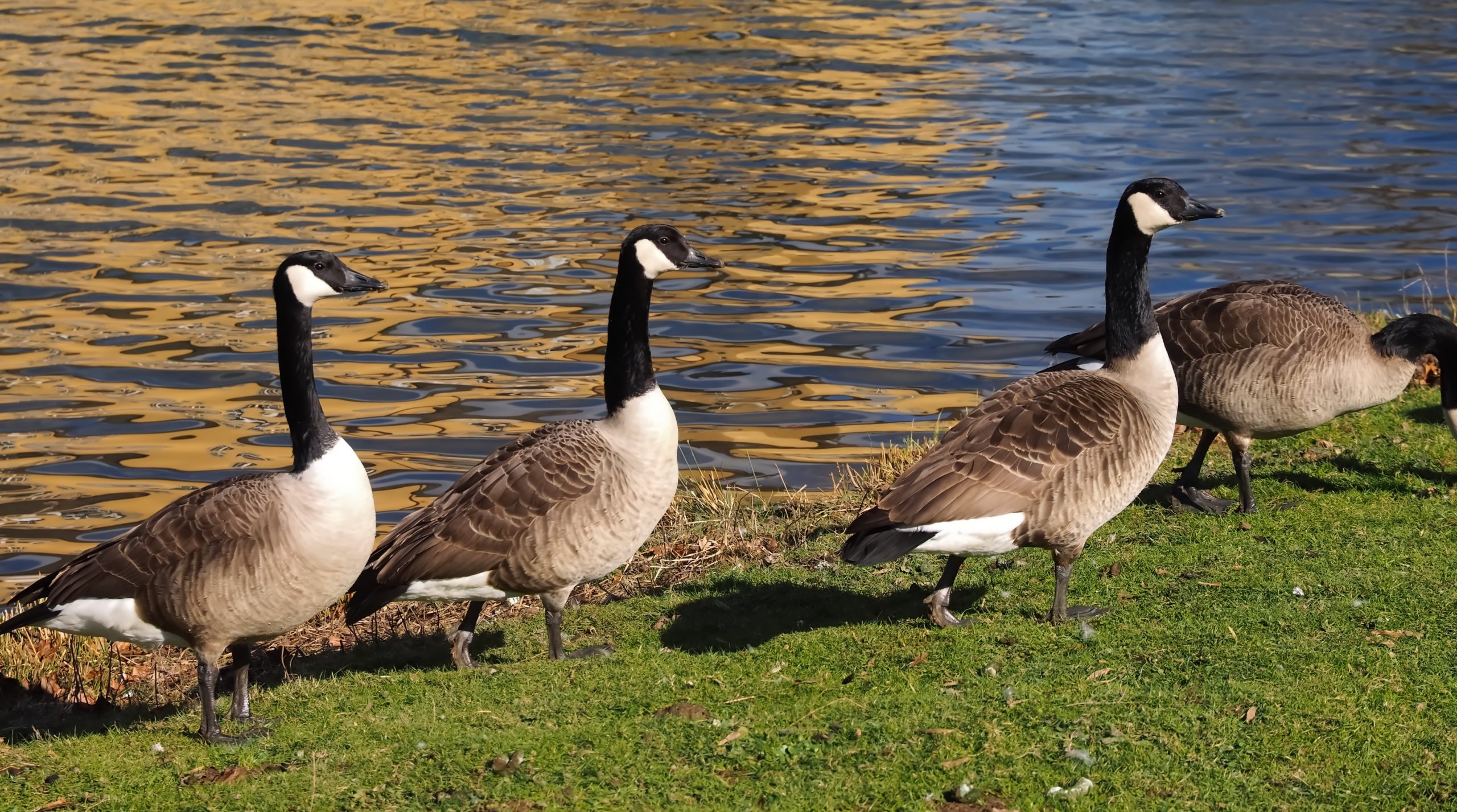
Geese from Canada on a meadow


Each spring, Canada geese return to parks, pathways and open grass across Mississauga. During nesting season, their defensive behaviour can create problems for pedestrians, cyclists, drivers and pet owners. From March through June, adult geese guard nests and their goslings. They can get aggressive and may hiss, lunge or block a path if they feel a person, pet or bike is getting too close.

Awkward places to nest

Geese are most often found where there is easy access to water and short grass. In Mississauga, that means waterfront spots such as Lakefront Promenade Park, Jack Darling Memorial Park and Port Credit, along with stormwater ponds and neighbourhood parks and green spaces such as Lake Aquitaine, Saigon Park and Lake Wabukayne. Nests can also be found in busy and inconvenient spots like boulevards, parking lots, sidewalks, sports fields and trails, and even your own backyard.

In some situations, the City may use safe and humane wildlife management methods, such as relocation, to help people and geese share public spaces. These actions protect geese and reduce aggressive interactions.

Why geese can be frustrating

At several City parks, large numbers of geese, known as flocks, may crowd the waterfront, block paths and leave droppings on seating, playground equipment and paved areas. This makes it harder for people to walk, cycle, picnic or let their children play in parks.

Droppings

Goose droppings can cause serious environmental and public health concerns because their feces have high levels of nutrients (phosphorus and nitrogen) as well as harmful bacteria like E. coli and salmonella. When these droppings are washed into stormwater management ponds, lakes and waterways, they accelerate toxic algae blooms and contaminate the water. As algae overgrows and decomposes, it consumes oxygen in the water that can harm and kill aquatic life like fish.

Aggressive behaviour

For the most part, geese tend to stay away from humans. However, tensions are strongest from March through June when adult geese guard their nests and goslings. During this time, residents should be aware that geese will hiss, lunge or block a path if they feel a person, pet or bike is too close.

Before a goose charges, it will often show that it wants more space. Typical warning signs include direct staring, a lowered head, hissing and spreading its wings to make itself look larger. If those warnings are ignored, a goose, or several geese, may lunge, rush forward or fly toward a person to push them away from their nest or goslings.

What to do during an aggressive goose encounter:

  1. Make direct eye contact with the goose.
  2. Avoid turning your back or running as it will chase you.
  3. Back away slowly and calmly without shouting, flailing or making sudden movements.
  4. If the goose gets very close, raise your arms only to protect your face and continue moving away from the nesting area cautiously.

Keep children and pets away

Small children should keep away from geese and nests. Parents and caregivers should remind children not to run toward, follow or try to touch geese, goslings or eggs, even if the goose seems calm. Giving nesting birds plenty of space helps lower the risk of aggressive reactions and keeps everyone safe.

Dogs can quickly make a situation worse during goose season, even when they are calm or just curiously wandering around. To a goose, a dog may look like a direct threat to their eggs or goslings. Keeping dogs leashed in public spaces, except in designated leash-free zones, helps owners stay in control and keep their dogs clear of nesting birds.

Give geese plenty of space, avoid grassy nesting areas when birds are present and move along calmly without letting a pet get close.

When to call the City

It’s important to know that there are clear rules for dealing with Canada geese. Many wild birds, including waterfowl and songbirds, are protected under the Migratory Birds Convention Act. That means people can’t move active nests, eggs or birds without proper authorization. Canada geese, along with their nests and eggs, are protected under federal law. Feeding wildlife is also prohibited under Mississauga’s Animal Care and Control By-law.

If you see a sick, injured or orphaned goose, contact Mississauga Animal Services at 905-896-5858. Residents should avoid trying to capture or treat the bird themselves. The Canadian Wildlife Health Cooperative can also be reached at 1-866-673-4781 to report multiple wild bird or mammal deaths.

For geese issues in City parks or other public spaces, residents can contact the City of Mississauga at 311, or 905-615-4311 from outside city limits. Reports are most useful when a bird is creating a clear safety issue, such as blocking a sidewalk or road.

When geese nest on private property, owners may need to consult a licensed wildlife management company on what steps they can legally take.

Why urban geese are so common

Across southern Ontario, Canada geese are common in urban areas with open grass, nearby water and few predators. Some populations migrate, while others stay in cities like Mississauga year-round. In spring, females lay several eggs and spend about four weeks incubating them while males stand guard. By early summer, adults shed their feathers, temporarily losing the ability to fly and gather in larger numbers near water, grassy areas and waterfront.

Canada geese can live for decades and often return to the same nesting areas year after year, when conditions remain favourable.

Feeding Canada geese is illegal

Feeding birds, like Canada geese, may seem harmless, but it can have negative consequences. These include serious health and safety concerns for residents and birds. Food such as bread and crackers does not meet the geese’s nutritional needs. It also encourages birds to gather in larger numbers and makes them less wary of people, which can lead to more aggressive behaviour.

Feeding any wildlife, including coyotes, squirrels, pigeons and foxes, is prohibited in Mississauga and can result in a fine between $365 and $100,000.

In a city where people and wildlife share the same parks, trails and the waterfront, keeping the peace with Canada geese starts with giving them space. When residents understand their behaviour and avoid feeding them, it becomes easier for everyone to share Mississauga’s green spaces safely.


Dig In! Garden Day returns to Mississauga

By Events, Food for thought

Join us at Brueckner Rhododendron Gardens on Saturday, June 27 to learn more about gardening opportunities across Mississauga.

Entertainment and activities | June 15, 2026


Mississauga is in bloom. Have a green thumb or looking to start your first garden? Come out to Garden Day to hear from gardening experts and learn more about flowers and plants. Gardening is a great way to stay active outdoors at any age. Gardens also help to improve air quality, support pollinators like bees and butterflies and manage stormwater by absorbing rain and helping to prevent flooding.

Come out to Brueckner Rhododendron Gardens on Saturday, June 27 at 10 a.m. to talk to experts and exhibitors. Join fun activities for the whole family and learn more about this unique park and how you can get involved.

Event details

What

Garden Day is an event to learn from gardening experts, participate in family-friendly activities and learn how to get involved in gardening opportunities across the city. A tour of Brueckner Rhododendron Gardens will also be offered at 10:30 a.m.

When

Saturday, June 27
10 a.m. to 12 p.m. (noon).

Where

Brueckner Rhododendron Gardens
660 Lakeshore Rd. W., Mississauga

Cost

This event is free to attend. Registration is not required, but you can sign up for event updates.

Getting there

Parking at Brueckner Rhododendron Gardens is limited, so consider walking, riding your bike or taking MiWay. Brueckner Rhododendron Gardens can also be accessed by walking or rolling along the Mississauga waterfront trail.

When parking in the neighbourhood, remember that parking is not allowed where “No Parking” signs are posted. Increased parking fines are in effect from May 1 to September 30 in the Lakefront Increased Penalty Zone. This zone includes local roads, City parks and municipal parking lots south of Lakeshore Road.

Learn more about the event.

Preparing your garden

If you’re thinking about starting a garden this year, it’s important to get it ready so your plants can flourish. Whether it’s in a backyard, or on a balcony or sunlit window ledge, creating a home garden is possible. Learn more about how to prepare your garden for gardening season and check out these growing guides.

Whether you’re a gardening enthusiast, a nature photographer or simply someone who appreciates the beauty of flowers and trees, Mississauga offers countless opportunities to connect with nature. Head out and explore some of Mississauga’s many enchanting gardens, lush parks and picturesque boulevards. Find a park near you.

Mississauga issues 2026 final property tax bills

By Food for thought

Save the payment due dates. Learn about tax rebates for low-income seniors and low-income persons with disabilities. Switch to convenience with the pre-authorized tax payment plan.

City services | June 8, 2026

The City of Mississauga has sent out the 2026 final property tax bills and emails have been sent to those who have signed up for eBill. The Mayor’s residential and commercial tax newsletters are also included. This is the second of two tax bills sent to property owners annually. Mark your payment due dates and pay your bill on time to avoid late fees and interest.For residential properties, payments are due July 2, August 6 and September 3. For non-residential properties, payments are due August 6.

You can pay your bill in the following ways:

  • Through your bank’s online or telephone banking, or in person at a branch.
  • Automatic withdrawals if you are signed up for a pre-authorized tax payment plan.
  • Post-dated cheques dropped off at City Hall drop boxes.
  • You can mail post-dated cheques to Mississauga Taxes, PO Box 3040, Station A, Mississauga ON L5A 3S4.
  • Credit card payment through a third-party provider (fees may apply).

Why property tax payments matter

About one-third of every property tax dollar pays for 200 City services you rely on. This includes recreation programs, buses, libraries, spray pads, parks and roads maintenance, emergency response and more. The remaining two-thirds funds schools and regional services like housing, paramedics, police and public health. Learn more about the City’s Budget, including how much property taxes are collected and how it is spent.

Key dates and rebates

Property tax payment due dates are hard deadlines set by City Council. Even during events like a postal strike, you must still pay on time to avoid late fees. If you did not receive your bill, you can view it online on the View Property Tax Information section. You can see your installment amounts and account balances.

Tax rebates are available for low-income seniors (65+ years) and low-income persons with disabilities. To qualify, you must own your home, live in it for at least one year and meet other requirements. Apply by December 31 using the form on the Apply for a tax rebate page. More information about financial help for older adults is available online, including supports from the City, Region of Peel, provincial and federal governments.

Switch to convenience with automatic payments

Life gets busy. Keeping track of property tax bills, due dates and avoiding late fees can be a lot to manage. Try the Pre-authorized Tax Payment (PTP) plan for property taxes to be automatically withdrawn from your bank account. Payments can be made monthly or on regular installment due dates.

How does it work:

  • To sign up for the PTP plan, fill out and submit the online form. You can also download the form and submit it with a void cheque by e-mail to tax@mississauga.ca or in person at the Civic Centre drop boxes either outside to the right of the north entrance on Princess Royal Drive or inside on the ground floor near the Welcome Desk.
  • To be enrolled in the PTP plan, you must not have any overdue taxes.
  • If you move, remove an owner or buy a new property, you will need to complete a new PTP application form and cancel the old PTP plan.
  • To cancel your plan, simply notify the City, in writing, at least 15 business days before the next withdrawal.
  • Enrolment, cancellation and changes to the PTP plan must be completed separately for each property that you own.

For questions about your property taxes please call 311 or email tax@mississauga.ca.

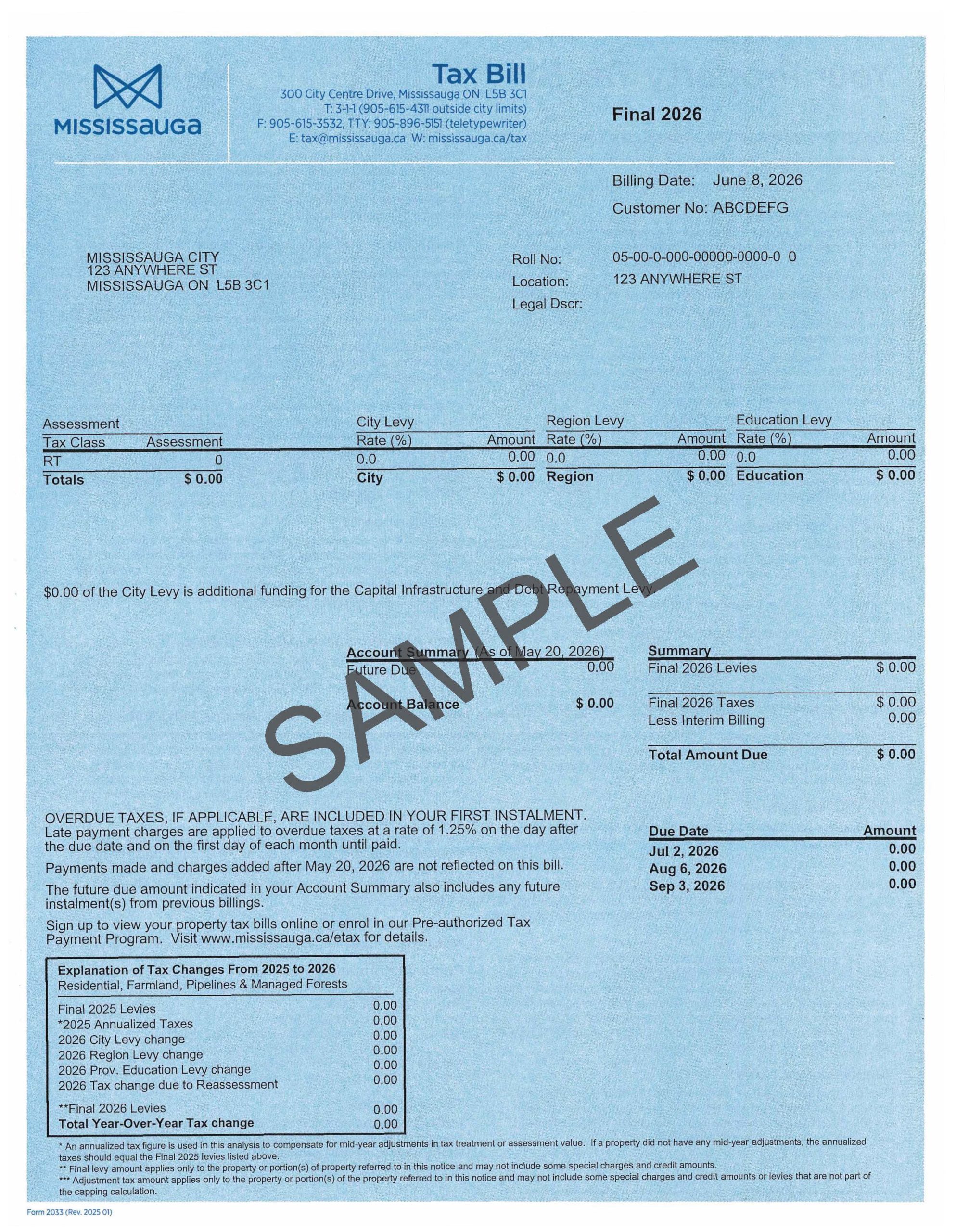
Image showing a sample of a Final Tax Bill.

Peel Region housing programs supported more than 43,000 households in 2025

By Announcement, Food for thought, Resources

Expanding services, improving outcomes, and strengthening housing supply to drive progress amid affordability challenges

BRAMPTON, Ont., June 2, 2026 – Along with our federal and provincial partners, Peel Region invested $368.97 million in housing and homelessness supports in 2025, helping 43,717 households access emergency shelter, housing supports, financial assistance, and pathways to stable housing.

Despite record housing unaffordability and continued system pressure across Ontario, Peel Region expanded services, improved outcomes, and strengthened housing supply. Across the system, Peel focused on helping residents move quickly from crisis to stable housing, contributing to a 59 per cent increase in households served during this current term of council.

In 2025, Peel Region helped 7,487 new households get or keep affordable housing.

Peel’s integrated system connects prevention, emergency response, and long-term housing supports, with 84 per cent of households receiving stability-focused services that help people stay housed or return to stable housing as quickly as possible.

Key 2025 achievements

Emergency response and shelter services

  • Peel served 8,152 individuals through emergency shelters across the system.
  • Peel maintained high client satisfaction in shelters, with 81 per cent of the local homeless population in shelters reporting a positive experience.
  • Shelter demand exceeded capacity, requiring 205 overflow hotel spaces, a 14 per cent increase from 2024.
  • Despite increased demand, average shelter stays decreased. The average stay dropped from 81 to 44 days for families and from 61 to 53 days for single adults, reflecting investments in housing supports and portable subsidies.

Street outreach and coordinated access

  • Peel Outreach served more than 600 individuals in 2025.
  • Teams moved more than 260 people into shelter, with 51 moving directly from encampments into housing.
  • Peel maintains a By-Name List of 2,185 homeless households – a real-time list of people experiencing homelessness which helps prioritize needs and connect people to housing support.

Housing supports and case management

  • Housing supports help prevent homelessness and support housing stability during a period of rising costs and demand.
  • Peel provided housing support and case management to 12,475 households, helping people find and keep stable housing.
  • Most households (84 per cent) received subsidies or short-term financial supports to avoid eviction or secure housing.

Financial assistance

  • The Housing Stability Fund and Homelessness Prevention Fund supported 6,068 households to prevent eviction or secure housing.
  • Supporting people to stay housed is significantly more cost-effective than relying on emergency shelter.

Portable housing subsidies

  • Peel supported 4,113 households through portable housing subsidies in 2025, including:
    • 1,203 households supported through regional subsidies
    • 2,910 households supported through the Canada-Ontario Housing Benefit
  • These subsidies help make housing more affordable in the private market and prevent homelessness.

Building for the future

  • Peel’s housing system includes 16,355 affordable housing units across the region.
  • Peel Region advances housing development projects, with 1,314 units and shelter spaces currently under development.
  • Projects include supportive, transitional, and community housing delivered by Peel Region, Peel Housing Corporation, and non-profit partners.
  • Council’s long-term investment of $842.8 million in capital funding is helping expand Peel’s affordable housing supply and sustain future development.

Challenge ahead

Housing needs in Peel remain significant. Approximately 99,800 households are in core housing need, meaning they live in housing that is inadequate or unsuitable.

Peel’s system is currently meeting only 17 per cent of that need.

Another 37,060 households remain on the centralized wait list for affordable housing. Nearly half are families (48 per cent), highlighting the growing pressure on families in the region. Demand continues to outpace supply due to low turnover in community housing and limited new unit completions.

Continuous improvement

In 2025, Peel strengthened program oversight, data quality and reporting to ensure public funds deliver maximum impact.

Peel delivers housing and homelessness services in partnership with more than 50 community organizations, creating a coordinated and responsive system of care.

To learn more, visit the Housing Services annual report dashboard.

Grown in Peel Celebrates 20 Years of Connecting Residents to Local Food

By Food for thought

BRAMPTON, Ont. – May 1, 2026. Peel Region is recognizing the 20th anniversary of the Grown in Peel program, marking two decades of supporting Peel’s agricultural sector and helping residents access fresh, locally grown and raised food.

A key feature of the program is the Grown in Peel Local Food Guide, an online resource designed to help residents discover local options and support Peel farmers. With more than 90,000 users in the past year, the guide provides convenient access to farms and farmers’ markets, as well as information on hours of operation, contact details, and product availability.

The guide highlights the range of products available across Peel, including locally produced vegetables and fruits, meats, eggs, honey, maple syrup, and plants from more than 36 locations across Brampton, Caledon and Mississauga.

Peel Region remains committed to supporting local agriculture and encourages residents to choose locally produced food and plants. Residents are invited to explore the Grown in Peel Local Food Guide and support farmers throughout the region.

For more information, visit growninpeel.ca.

Mississauga refreshes its Strategic Plan

By Food for thought

Imagine Mississauga (2026-2031) will help guide growth, services and decision-making now and into the future.

Local government | April 17, 2026

The City of Mississauga has refreshed its Strategic Plan, setting a clear direction for how the City will plan and make decisions now and into the future.

Imagine Mississauga (2026–2031) builds on the City’s original Strategic Plan adopted in 2009, while modernizing to meet today’s needs, including affordability pressures, climate change, transportation options, economic competitiveness and community expectations for transparent and accountable government.

The refreshed Plan was shaped through extensive engagement efforts, informed by research, benchmarking and more than 19,000 points of public input, along with feedback from City staff, Council, Indigenous communities and equity‑deserving groups.

The Strategic Plan is structured around five pillars: Belong, Connect, Prosper and Green and the introduction of a new pillar, Trust. This new pillar represents the City’s commitment to fiscal responsibility, transparency and delivering value for money.

In addition to refreshing the City’s long‑term vision and values, the Plan places a strong focus on implementation. To guide service delivery and long-term decision-making across the organization, a new Corporate Accountability Framework was developed. This framework links strategic priorities to planning, budgeting and performance measurement.

The refreshed Strategic Plan – Imagine Mississauga (2026-2031), will serve as a living document, guiding City programs, investments and policies as Mississauga continues to grow.

For Your Information: Painted Traffic Calming Edge-lines

By Food for thought

In Ontario, pavement markings are considered a guidance or advisory system that works in conjunction with regulations identified by signs and traffic signals. They are not an enforceable traffic device on their own.

Painted edge-lines have proven to be successful in reducing operating speeds on residential roadways by visually reducing the travelled width of the roadway making it less comfortable for motorists to increase their operating speeds. It is important to note that these edge-lines are not designated bicycle lanes, do not delineate a pedestrian pathway or on-street parking, nor do they impact the existing parking regulations on the roadway.  Motorists are free to track over the lines while navigating the roadway, especially when passing an oncoming vehicle, provided it is safe to do so.

Painting of edge-lines are considered a “soft” traffic calming measure and a relatively inexpensive and effective first step in addressing local residential traffic safety concerns.