Discover and shop from IDEA Mississauga-supported businesses at Sourced in Sauga on Saturday, September 26.
Business and innovation | September 11, 2026
IDEA Mississauga invites the community to Sourced in Sauga, a one-day celebration of local entrepreneurship presented in partnership with Square One Shopping Centre. This pop-up shopping experience brings together some of Mississauga’s most innovative entrepreneurs, artisans and small businesses for a day of discovery, connection and community.
From childcare services and toy subscriptions to dog perfumes and handcrafted jewellery, there’s something for everyone.
More information about how to register and the full list of vendors is available through the registration link on the Sourced in Sauga event page.
What
Browse a diverse selection of locally made products and services, meet the entrepreneurs behind the brands and learn how IDEA Mississauga’s programs have helped support their growth and success.
Shoppers will also have the chance to win one of two Square One gift cards valued at $250 each. So whether you’re looking for unique gifts, getting a head start on seasonal shopping, or simply exploring what Mississauga’s business community has to offer, Sourced in Sauga is an opportunity to support local entrepreneurs and discover something new.
First human case of West Nile virus in 2026 confirmed in Peel region
BRAMPTON, ON (September 2, 2026) – Peel Public Health has confirmed the first human case of West Nile virus in Peel region this year. It is a reminder for residents to take precautions against mosquito bites, even into the fall months.
West Nile virus is passed to humans through the bite of an infected mosquito. Most people infected with the virus do not develop symptoms. In some cases, symptoms may include fever, headache, body aches, fatigue, nausea, vomiting or skin rash. Rarely, the virus can cause serious illness, such as swelling of the brain or spinal cord.
Older adults, people with weakened immune systems, and those with certain chronic conditions are at higher risk for serious complications.
Peel Public Health identified the first mosquitoes positive for West Nile virus this season on July 27, 2026. Since then, the health unit has continued to monitor mosquito activity across Brampton, Mississauga and Caledon through its annual surveillance program.
Residents are encouraged to protect themselves from mosquito bites by:
Applying an approved insect repellent containing an ingredient effective against mosquitoes, such as DEET or icaridin, to exposed skin and clothing. Read and follow the manufacturer’s directions for safe use.
Avoiding areas with large mosquito populations and taking extra precautions between dusk and dawn when mosquitoes are most active, and at any time in or near shady, wooded areas.
Wearing light-coloured, tightly woven, loose-fitting clothing such as long pants, a long-sleeved shirt, shoes, and socks to protect exposed skin.
Making sure all window and door screens fit securely and are free of tears and holes.
Keeping rain barrels tightly covered with screen mesh.
Removing or draining items on your property that collect standing water. Water that is stagnant for more than seven days is an ideal breeding site for mosquitoes. You can report stagnant water sites to Peel Public Health at 905-799-7700 or online.
NOTE: Infants younger than 6 months old, should not use an insect repellent containing DEET or icaridin. Instead, use a mosquito net when babies are outdoors in a crib or stroller.
For more information about West Nile virus, visit our website or call Peel Public Health at 905-799-7700 from 8:30 a.m. to 4:30 p.m., Monday to Friday, or toll-free at 1-888-919-7800.
Quotations
“The first human case of West Nile virus this year is an important reminder that infected mosquitoes remain active in our community. While the overall risk of getting a West Nile virus infection is lower during the fall months, this case reinforces the importance of residents protecting themselves against mosquito bites.”
Dr. Alexa Caturay, Medical Officer of Health, Peel Region
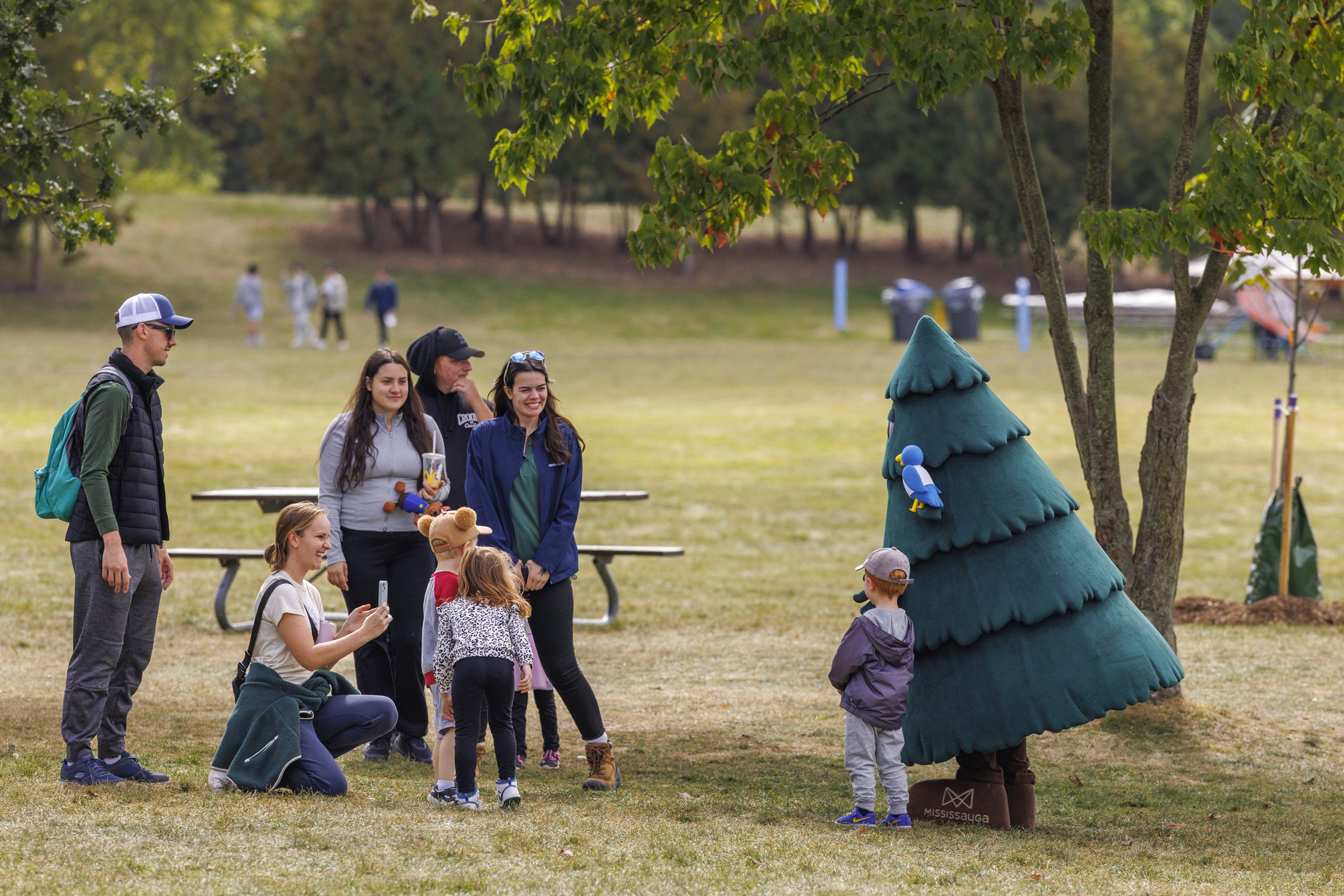
Residents are invited to connect with nature, learn from forestry experts and discover the many benefits of Mississauga’s urban forest. From cleaner air and cooler neighbourhoods to enhanced biodiversity and community well-being, trees play an important role in keeping our city healthy and green.
More than just trees
Mississauga’s urban forest is a network of natural spaces that provide habitat for wildlife, improve air quality, reduce summer heat and create healthier neighbourhoods.
National Forest Week and fall events programming gets to the root of what makes the city green. Whether you’re planting a tree, discovering local wildlife on a guided walk or picking up a free tree for your yard, the events offer fun, educational and hands-on experiences for all ages.
What
Forestry Fall Festival: trees, reptiles and more
The second annual Forestry Fall Festival returns to Erindale Park with a day of family-friendly activities, packed with trees, treats, tractor-sized fun and community spirit.
There’s something for everyone at the festival. Enjoy horse-drawn wagon rides, explore reptile and snake exhibits, plant a tree, and learn how Mississauga’s urban forest is cared for. Meet the forestry experts behind the work and get an up-close look at the specialized equipment they use to keep things growing and healthy.
In addition to the Forestry Fall Festival, there are plenty of opportunities to get outdoors and connect with nature this fall:
Dig in and make a difference
Participate in tree planting events, including a Halloween-themed “Trick or Trees” event – a frightfully fun and forest-friendly way to do your part for the environment. Dates: September 19, October 3, October 17, October 24 and October 31.
Take the scenic route
Go on guided walks with Forestry staff to learn about local wildlife and native trees surrounding Mississauga’s local parks and trails. Dates: September 23, October 24 and November 7.
Bring home a free tree
Register for tree giveaways to add a touch of nature to your yard. Open to Mississauga residents only. Limited supplies. Dates: September 24, October 7 and October 14.
Lend a hand with a clean-up
Help keep local parks litter-free to protect wildlife and make our green spaces more welcoming for everyone. Date: October 17.
Who
Residents interested in learning about local trees and wildlife, gaining practical tree care knowledge or enjoying the outdoors. All events are designed for families, children and nature enthusiasts alike.
When
September 19 to November 7 – various dates and times throughout the week.
Where
Various parks and sites throughout Mississauga.
Registration
Registration is required for tree planting events, guided walks and tree giveaways. Space is limited. Visit mississauga.ca/national-forest-week for event dates and registration information.
Staff are examining ways to support jobs while awaiting federal or provincial tariff relief.
Local government | August 25, 2026
Today, in light of unfair trade tariffs, Mississauga Mayor Carolyn Parrish met with the President and CEO of the Mississauga Board of Trade David Wojcik, the City’s Acting Chief Administrative Officer, and the Director of Economic Development to map out ways the City can advocate for and support small and medium-sized businesses and jobs disrupted by uncertainty.The suspension of trade negotiations and escalation of US tariff policies against Canada present a significant and ongoing threat to Mississauga’s businesses and workers.
Mississauga’s economy is particularly vulnerable to US tariffs: 18 per cent of total employment – roughly 89,000 jobs – is tied directly to US exports. Key areas affected include automotive parts, machinery and electronics, plastics and rubber, furniture, and steel and aluminum products.
As a City, we are determined to stand up and defend these jobs and sectors. We are encouraged that the federal government today is rolling out rapid assistance to workers and businesses hit by this latest trade and economic turbulence.
These troubling trade developments imperil jobs and risk a spike in inflation. That is why we are exploring ways in which to help our local businesses.
Additionally, before today’s federal announcement, staff have already applied for $1.5 million in funding under the federal Regional Tariff Response Initiative (RTRI). Securing this funding would help us deliver a trade mission acceleration program designed to help Mississauga’s small and medium-sized businesses diversify into non-US markets through export readiness training and trade missions.
It is clear that we must diversify our international trade partnerships. Mississauga has always been open to the world. That openness will facilitate an expansion of productive and solid international partnerships.
The City’s Partners in Trade roundtable will be consulted for further input from members on this critical, developing issue.
Funding is available for organizations of all sizes; interested applicants are encouraged to attend a virtual information webinar.
City services | August 24, 2026
Not-for-profit organizations in Mississauga seeking financial support for the 2027 calendar year are encouraged to begin the application process for the City of Mississauga’s Culture and Community Grant Programs. Funding is available for organizations of all sizes, including small and grassroots groups that enhance and expand recreational opportunities, local events, arts programming, and other community initiatives in Mississauga.Organizations interested in applying to a grant program are encouraged to review the grant guidelines and attend one of the applicable virtual information webinars being held in September.
Not-for-profit community groups can apply for the following grants:
Grant funding for this program supports emerging and established, not-for-profit, professional and community-based arts, culture and heritage organizations in Mississauga. This grant supports the development of exemplary arts, culture programs and services with the intent to improve participation, understanding and appreciation of arts, culture and heritage for residents of Mississauga.
This program provides annual and multi-year grants to Mississauga-based, not-for-profit community groups to deliver programs and services that keep Mississauga residents active, healthy and engaged in their communities. The program aligns with the strategic priorities of the Recreation and Parks, Forestry and Environment Divisions. Eligible community groups include sports organizations, groups focused on youth, older adults, outdoor recreation, adaptive and inclusive recreation, and more.
Cultural traditions and celebrations are important to Mississauga residents and visitors. This program issues funding to offset expenses associated with providing arts, heritage and cultural festivals/celebrations to Mississauga residents and visitors.
Themed Youth in Culture, this program provides funding to organizations, collectives and Business Improvement Areas (BIAs) that deliver arts and culture projects that are culturally-responses to the needs of youth. The grant prioritizes youth-led projects that create small-scale cultural experiences for youth that reflect the unique interests and lived experiences of these groups.
This program provides grants to Mississauga-based, not-for-profit community groups to deliver small-scale projects, including active living and physical health programs, community-building activities, neighbourhood events, workshops and skill-building sessions, among others.
Welcome to the first edition of the Lakeshore Trunk Sewer and Watermain Project Newsletter. This quarterly newsletter will provide updates on project progress, upcoming activities construction photos.
About the project
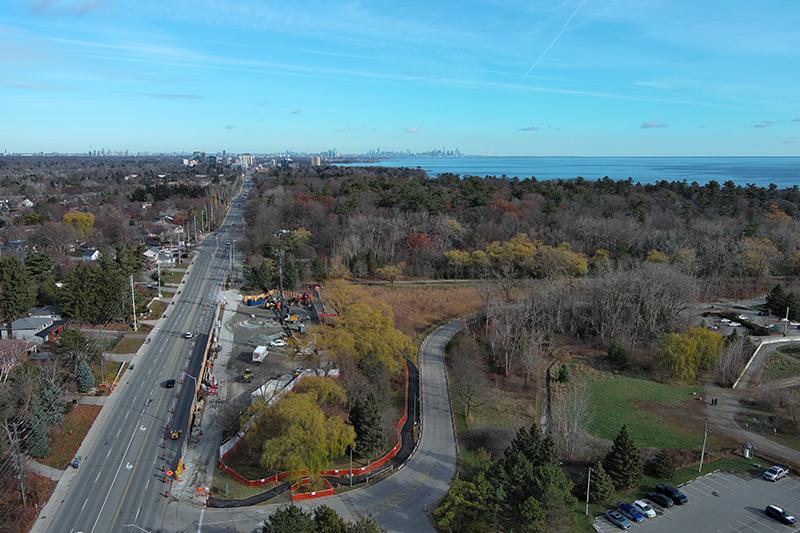
Peel Region is building a new large sanitary sewer and installing watermain along Lakeshore Road, from Jack Darling Memorial Park to Elmwood Avenue. This multi-year construction project is a necessary investment that will support the long-term needs of the community and provide the following benefits:
Ready for growth: Larger pipes mean the system can easily support new homes and businesses in South Peel.
Better flow: Water and sewage will move through the system more smoothly and efficiently.
Reliable service: Ensures a steady, high-quality water supply for your home or business with fewer interruptions.
A stronger system: New infrastructure is more durable and less likely to break or fail during storms.
Cost Savings: By replacing 7 old pumping stations with this new gravity-based sewer pipe, Peel saves money on expensive long-term operations and maintenance costs.
For more information on this project, and related projects in the area, please watch our presentation from the project Open House held in April.
Image
Construction progress
Since the project began in October 2025, crews have completed the following work:
Located existing underground utilities such as hydro and gas at multiple key areas along the length of Lakeshore Road.
The shaft (also known as a tunnel access point) at Jack Darling Memorial Park has been completely dug and we are preparing the area for our tunnel boring machine to start tunneling this summer. We are about 45 meters underground here!
The tunnel access point at Richard’s Memorial Park is fully dug. We are 34 meters deep!
The tunnel access point on Pine Avenue South is currently being dug.
The tunnel access point at Elmwood Avenue in the public parking lot on the Northeast corner of Elmwood and Lakeshore has begun. We are drilling concrete piles in the ground that will provide ground support to access the tunnel deep into the ground.
We have postponed our start at the Front Street North – Marina Park construction compound. We expect to start back here this summer.
Image
What’s next in 2026
We will bring our tunnel boring machine to site and tunneling will begin once our tunnel access point is ready at Jack Darling Memorial Park.
The contractor will begin excavating at the Marina Park/Front Street North site once the compound has been set up this summer.
We will complete digging the shafts at our construction compounds along Lakeshore Road and begin the tunnel boring process.
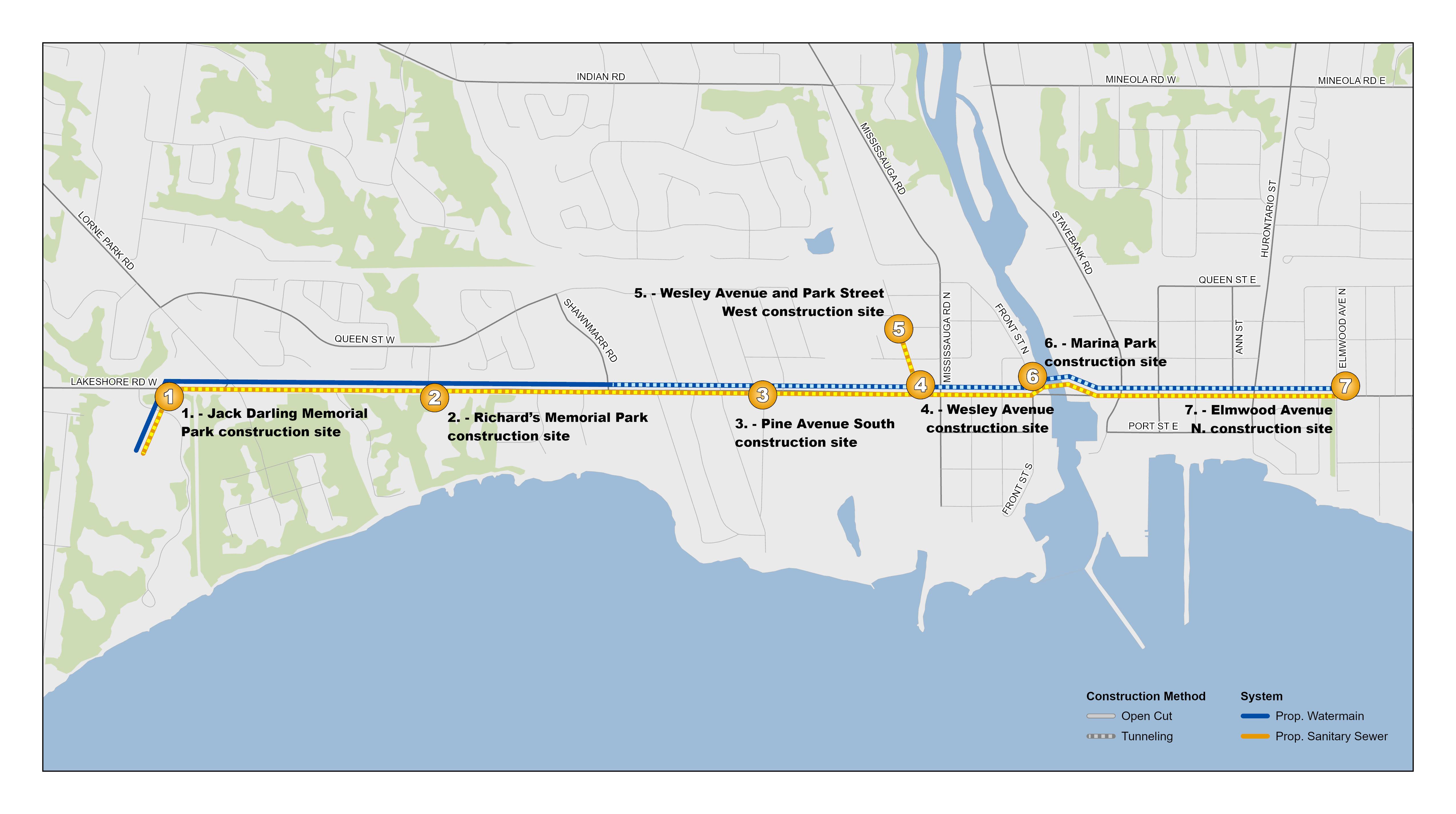
We will begin open cut construction of our new watermain on Lakeshore Road. This differs from tunneling as it involves digging a trench, laying the pipe then filling in the trench. The areas of open cut construction are indicated in the map at the top of the newsletter.
Traffic, transit and trail impact
As the project continues, you will see:
Lane reductions on Lakeshore Road West
Temporary road closures and detours
Temporary closure of municipal parking lots at Elmwood Avenue North, Wesley Avenue and Front Street North
Bus stop relocations
Sidewalk detours
Please follow posted signage and allow for extra travel time. Details on specific locations and timings will be available as the construction progresses.
Park impact
Jack Darling Memorial Park Leash-Free Zone: Access to leash-free areas will change while we set up our work zones. We will send out notices ahead of time to let you know what to expect and when to expect it.
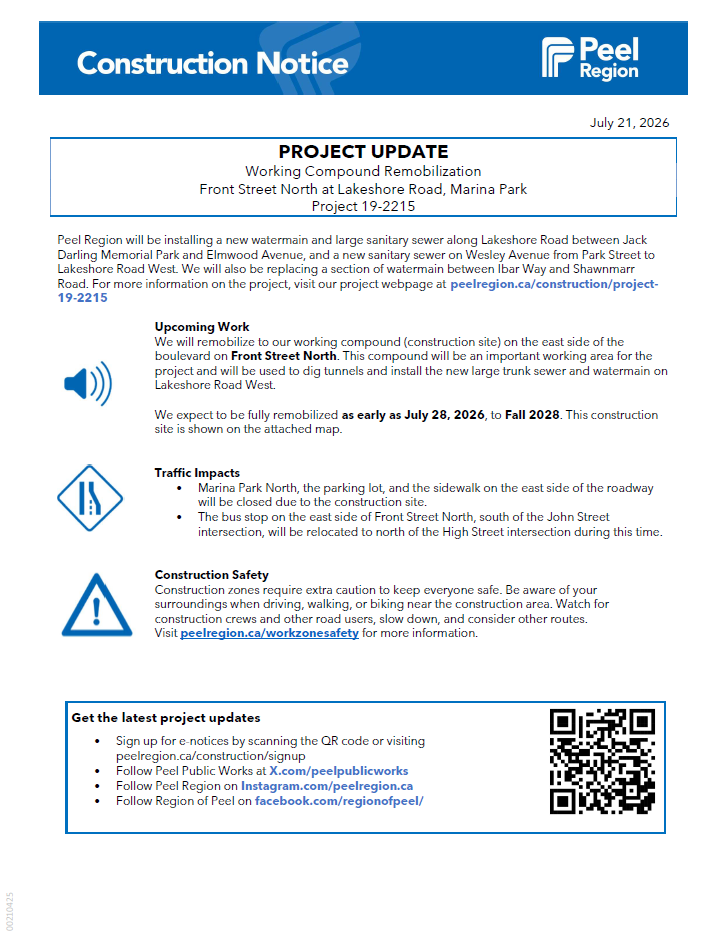
Marina Park – Front Street North: Marina Park North, the parking lot, and the sidewalk on the east side of the roadway will be temporarily closed once we have our construction site set up on the east side of the boulevard on Front Street North.
Lakeshore Road West Trail: The multi-use trail on the south side of Lakeshore Road West is currently rerouted around the construction sites at both Jack Darling and Richard’s Memorial Parks. For safety, please follow the posted signage.
Safety reminder
Don’t enter fenced construction areas
Obey all signage and traffic personnel
Keep children and pets clear of work areas
Use designated pedestrian routes
Community spotlight: Art on the construction walls
Keep an eye out for some local flair. We’ve partnered with Mississauga Art Council to brighten construction sites with local artwork.
Image
Current feature: Check out the mural “Mino-nawae-indawaewin / Living in Harmony” by artist Nyle Miigizi Johnston at the Jack Darling Memorial Park construction site. It’s a beautiful reminder of our connection to the land and water we are working to protect.
Hot, humid temperatures are expected over Canada Day and through to the end of the week
BRAMPTON, Ont. – June 30, 2026. Peel Public Health has issued a heat warning for Peel region as hot temperatures and humidity begin June 30, lasting until Friday, July 3, and possibly into the weekend.
This warning comes as residents get ready to enjoy many outdoor events across the region this week, and Peel Public Health wants to remind everyone how to stay safe and avoid heat-related illnesses, including heat stress, heat exhaustion and heat stroke.
Peel’s Medical Officer of Health issues heat warnings when Environment and Climate Change Canada forecasts that the following thresholds have been reached:
Daytime maximum temperatures are expected to reach 31 C or higher and overnight temperatures are 20 C or higher
OR
Humidex values are expected to reach 40 C or higher.
An extended heat warning will be issued if a heat warning lasts 3 or more days.
“With many residents planning to spend time outdoors celebrating Canada Day and enjoying summer activities, it’s important to remember that extreme heat can quickly become dangerous,” said Dr. Alexa Caturay, Medical Officer of Health for Peel Region. “Heat-related illnesses are preventable. We encourage everyone to drink water frequently, take breaks in cool or shaded areas, and check in on older adults, young children, neighbours, those with chronic illness and others who may be more vulnerable to the effects of extreme heat.”
Health risks of hot temperatures
People at higher risk of experiencing heat-related illness include older adults, infants and young children, individuals with chronic illness, and people who work outdoors. Since it is still early in the summer, many people may not be adapted to the heat, so pay attention to how you and those around you are feeling.
Be aware of the following signs and symptoms of heat illness:
High body temperature
Skin rash
Muscle cramps
Dizziness or fainting
Nausea or vomiting
Heavy sweating
Headache
Rapid breathing and heartbeat
Extreme thirst
Dark urine and decreased urination
Confusion and lack of coordination
If residents experience any of these symptoms during extreme heat, they should immediately move to a cooler place and drink water.
The following are signs and symptoms of heat stroke. Heat stroke is a medical emergency. Call 911 or your local emergency number immediately.
High body temperature
Lack of coordination and confusion
Dizziness or fainting
No sweating, but very red, hot skin
Keeping cool in extreme heat
There are places across the region where residents can go to keep cool. See your local municipality’s website for information on how to respond to heat including cooling centres, splash pads, pools, libraries and community centres. Hours at these locations may vary on July 1, Canada Day.
The City of Mississauga continues to make meaningful progress toward its 5 Year Energy Conservation Plan, surpassing its annual energy reduction targets while expanding investments in sustainable infrastructure and smart building technologies.
Business and innovation | June 30, 2026
Highlights from Mississauga’s 2025 Annual Energy Report show a 2.6 per cent reduction in overall energy use, exceeding the City’s annual target of one per cent, alongside a 3.5 per cent reduction in greenhouse gas emissions across its corporate buildings.
These results reflect ongoing efforts to modernize facilities, improve operational efficiency and transition to cleaner energy sources.
The City is steadily transitioning away from fossil fuels by integrating new technologies into both new and existing facilities. In 2025, this included:
Installation of heat pump systems, hybrid boilers and electrified water heating systems
Continued rollout of solar photovoltaic (PV) systems and solar-ready infrastructure
Expansion of electric vehicle (EV) charging capacity, with more than 170 connections in place
Together, these actions support Mississauga’s commitment to reducing emissions, improving efficiency and building a more sustainable, resilient city.